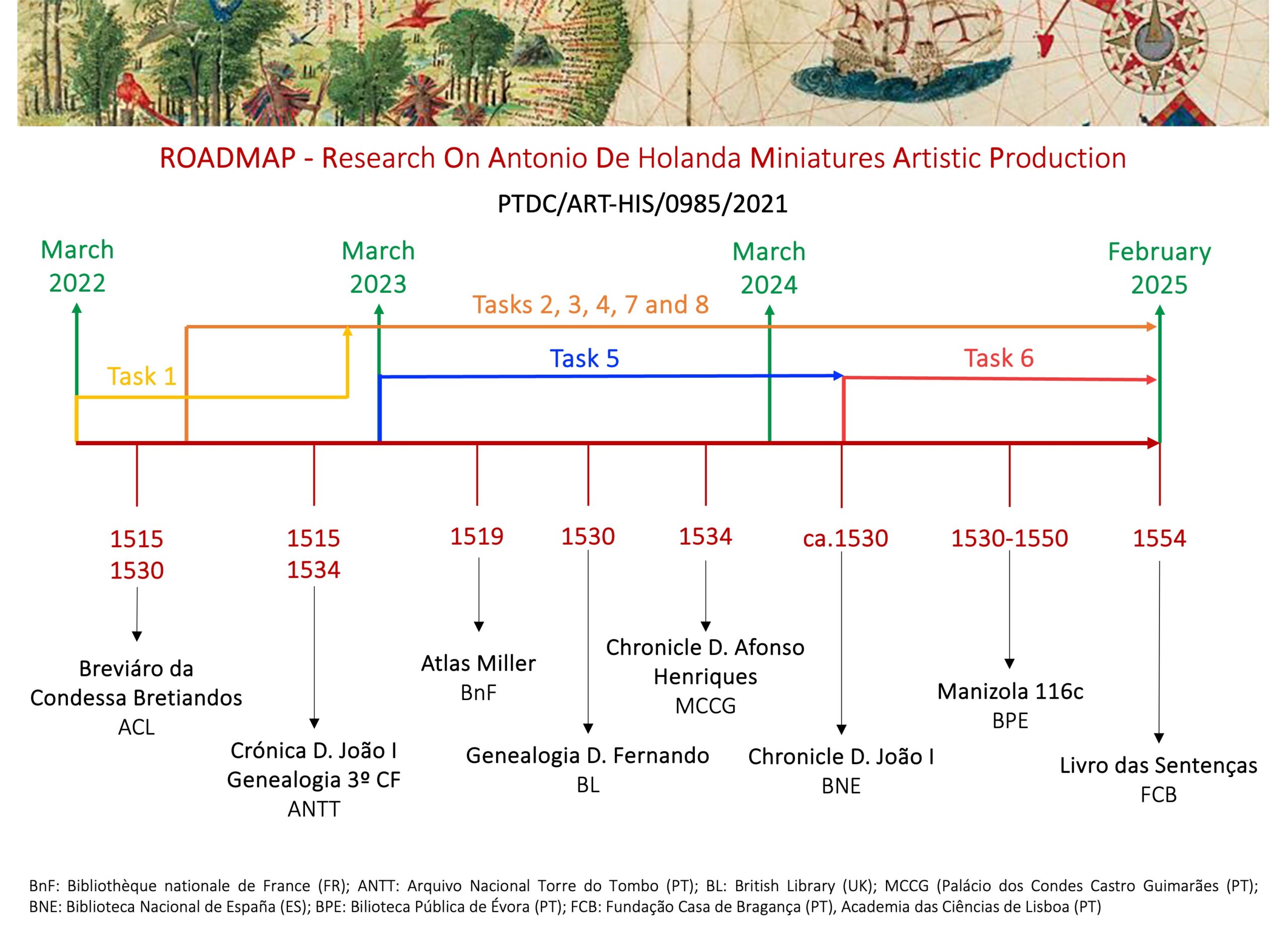
The ROADMAP aims to innovate from a methodological point of view by promoting the crossing of knowledge of art history, iconography, and visual culture in the Renaissance, using results obtained from Heritage Sciences. The project will be divided into three main lines: 1) the characterization of Holanda’s artistic production by establishing the chronology of his technical procedures (the evolution of painting/drawing techniques, painting fingerprints, and the relationship between his underdrawings and paintings); 2) the study of the fingerprints of relations between Holanda and those he collaborated with, such as Simon Bening, João de Menelau, Francisco de Holanda, or the Homem and Reinel family cartographers involved in the production of the Atlas Miller; and 3) the development of an easy-to-use tool to validate Holanda’s works based on his artistic fingerprints gathered from the ROADMAP project: Considering the current understanding of the selected manuscripts, four groups can be established for study under the ROADMAP project: i) manuscripts attributed to A. de Holanda (“Chronicle of D. João I” (DGLAB/TT – Crónicas n.º8, 1515) and the “Chronicle of D. Afonso Henriques” (1534)); ii) manuscripts attributed to Holanda in collaboration with S. Bening (“Genealogy of Infant D. Fernando” (Add. MS 12531 no7, 1530) and the “Chronicle of D. João I” (ca. 1530)); iii) manuscripts attributed to Holanda in collaboration with another illuminator (“Atlas nautique du Monde, dit atlas Miller” (GE DD-683-5 RES, 1519) and the “Genealogy of the 3rd Count of Feira” (DGLAB/TT – Genealogias Manuscritas n.º 106, 1534) ); and iv) vague attributions to Holanda (“Livro das Sentenças” (1554) and the “Manizola 116c” (undated)).
This task will focus on the in-depth study of the origin, history, and provenance of the manuscripts under analysis. For the comprehensive examination of the illuminations in the ROADMAP project, it is essential to determine the circumstances of their commission and the “road” they followed to reach the present day. In other words, it is important to ascertain to whom the work was intended, who sponsored it, and what motivated its commission,
as well as establishing their trajectory from their origin to the present.
The main results expected from this task are:
– to trace the historical and artistic path of the works by António de Holanda,
from its creation to the present day, determining with greater precision their provenance.
– to determine the artistic profile of possible students and collaborators of António de Holanda’s workshop.
This task aims to better understand the historical and artistic context of each of the pieces under analysis in the ROADMA. Through this task, we will seek to identify an artistic and historical thread that will help us comprehend the evolution of Holanda’s creative process. We aim to establish a link between his roles at the Court as a heraldic officer, his connections with Simmon Bening, and the financial support he received during the first half of the 16th century. Additionally, we will attempt to identify other artists who may have collaborated with Holanda throughout his career, considering that collaborative work was a common practice at that time.
The main results expected from this task are:
– to characterize the historical-artistic context of each of the artworks under analysis in the ROADMAP;
– to apprehend the evolution of António de Holanda’s creative process;
– to detect in Holanda’s career the intervention of other artists who may have collaborated with him, namely the unknown J. Menelau, Francisco de Holanda and his sister Catarina.
This task will yield the necessary results to characterize António de Holanda’s artistic production and establish the chronology of his technical procedures (the evolution of painting/drawing techniques, painting fingerprints, and the relationship between his underdrawings and paintings). Surface examinations along with elemental and molecular characterisation of the illuminations will be utilised.
The main results expected from this task are:
– to completely characterize the chronology and evolution of Holanda’s painting and drawing technique(s).
This task concerns the chemometric analysis of the results gathered from vibrational spectroscopic analysis (e.g. Raman and FTIR), molecular and surface analysis, and even codicology, iconography and Visual Culture analysis
The main results expected from this task are:
– identify the fingerprints of the relations between Holanda and those with whom he worked based on the results gathered from Art History, Iconography, Visual Culture and material characterization.
This task aims to develop a tool for future users to validate illuminations by António de Holanda based on artistic fingerprints and elemental and molecular information provided from the in-situ and non-invasive analysis. The main results expected from this task are:
– to develop an easy-to-use tool to validate António de Holanda illuminations based on pattern recognition adopting deep learning algorithms built with the results gathered from Tasks 2, 3 and 4.
This task concerns validating António de Holanda’s easy-to-use authenticity assessment tool developed in Task 5. For this, three illuminated manuscripts will be analysed following the same step-by-step methodology described in Task 3: one held by the Biblioteca Nacional de España (Madrid, Spain)—the “Chronical of D. João I” (Vitr/25/8); another by the Biblioteca Pública de Évora —the “Manizola 116c”; and the last one held by the Fundação Casa de Bragança —the “Livro das Sentenças”.
The main results expected from this task are:
– To validate António de Holanda’s easy-to-use authenticity assessment tool;
– To clearly attribute the authorship of the “Chronicle D. João I” to António de Holanda;
– To certify Antonio de Holanda’s authorship of “Manizola 116c”;
– To infer the contribution of António de Holanda in the production of the “Livro das Sentenças”.
– Make this easy-to-use authenticity assessment tool available for the scientific community.
This task concerns developing several activities for disseminating the project’s results to the scientific community and the general public. The main results expected from this task are:
– Workshops for the general public and specialized audiences;
– Public talks for the general public and scientific community at the end of each international mission
– “The in-situ ROADMAP talks”.
– Organization of an international conference for the dissemination
of the results of the project to the scientific community;
– to place available to the community an online database with the information generated in the framework of the project and to promote the creation of an international online database on the materiality of Renaissance illuminated manuscripts;
– Publication of a book on Antonio de Holanda’s art of illumination.
This task involves managing and integrating all the results generated from Tasks 1, 2, and 3, considering the main lines of the project: 1) the characterization of António de Holanda’s artistic production by establishing the chronology of his technical procedures (the evolution of painting and drawing techniques, painting fingerprints, and the relationship between his underdrawings and paintings); 2) the study of the relational fingerprints between Holanda and those with whom he collaborated, such as Simon Bening, João de Menelau, Francisco de Holanda, Catarina de Holanda, or the Homem family cartographers involved in the production of the Miller atlas and elsewhere; and 3) the development of an easy-to-use tool to validate António de Holanda’s works based on his artistic fingerprints gathered from the ROADMAP project. The main results expected from this task are:
– management and integration of all the results of the project;
– to coordinate all the tasks and team members, ensuring the achievement of the objectives of the project, and promoting the best work capability between all the team members;
– to coordinate the project and the team members with FCT.
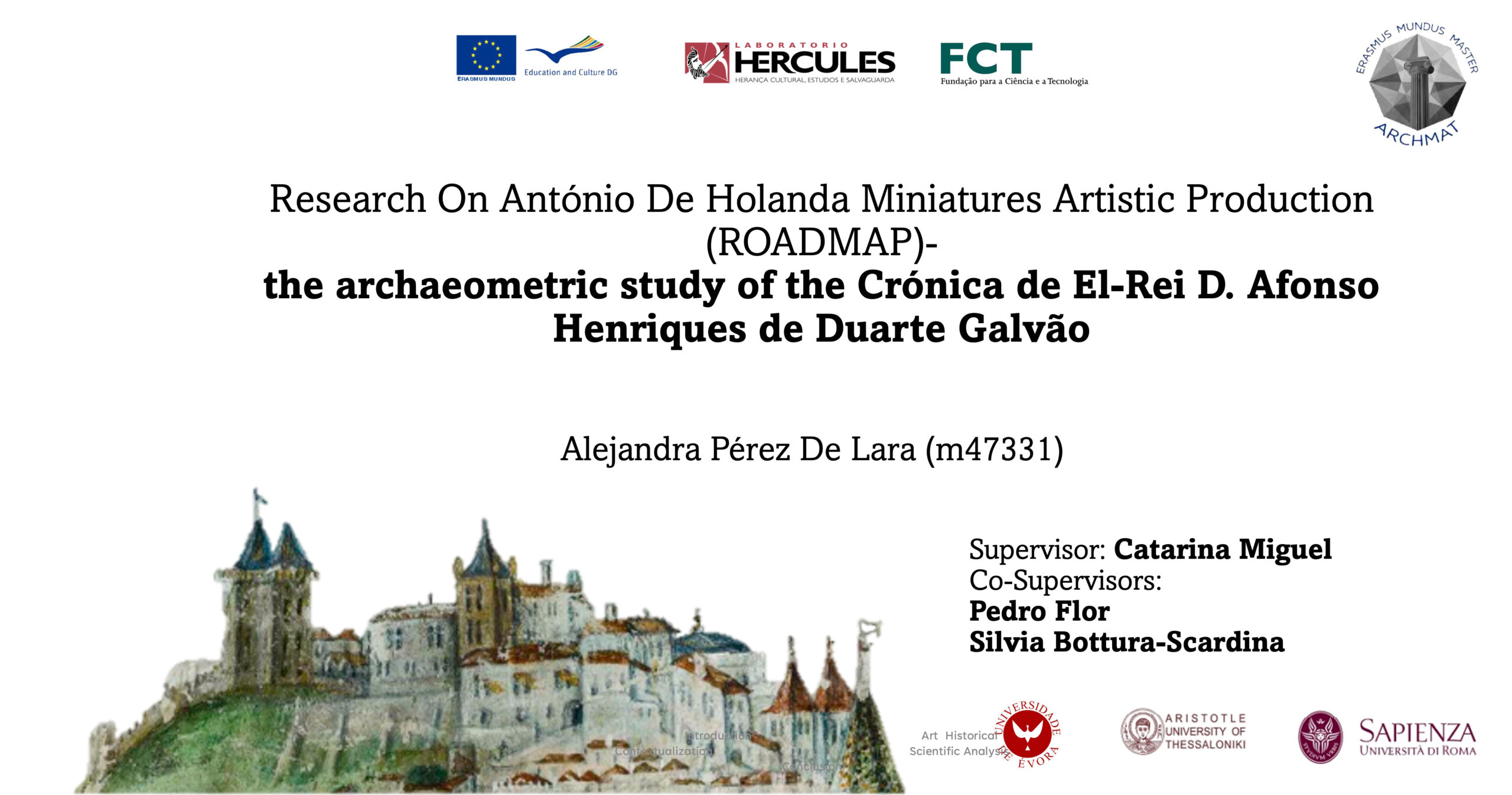
“Research On António De Holanda Miniatures Artistic Production (ROADMAP) – the archaeometric study of the Chronicle of El-Rei D. Afonso Henriques by Duarte Galvão”. Master in Archaeological Materials Science (ARCHMAT).
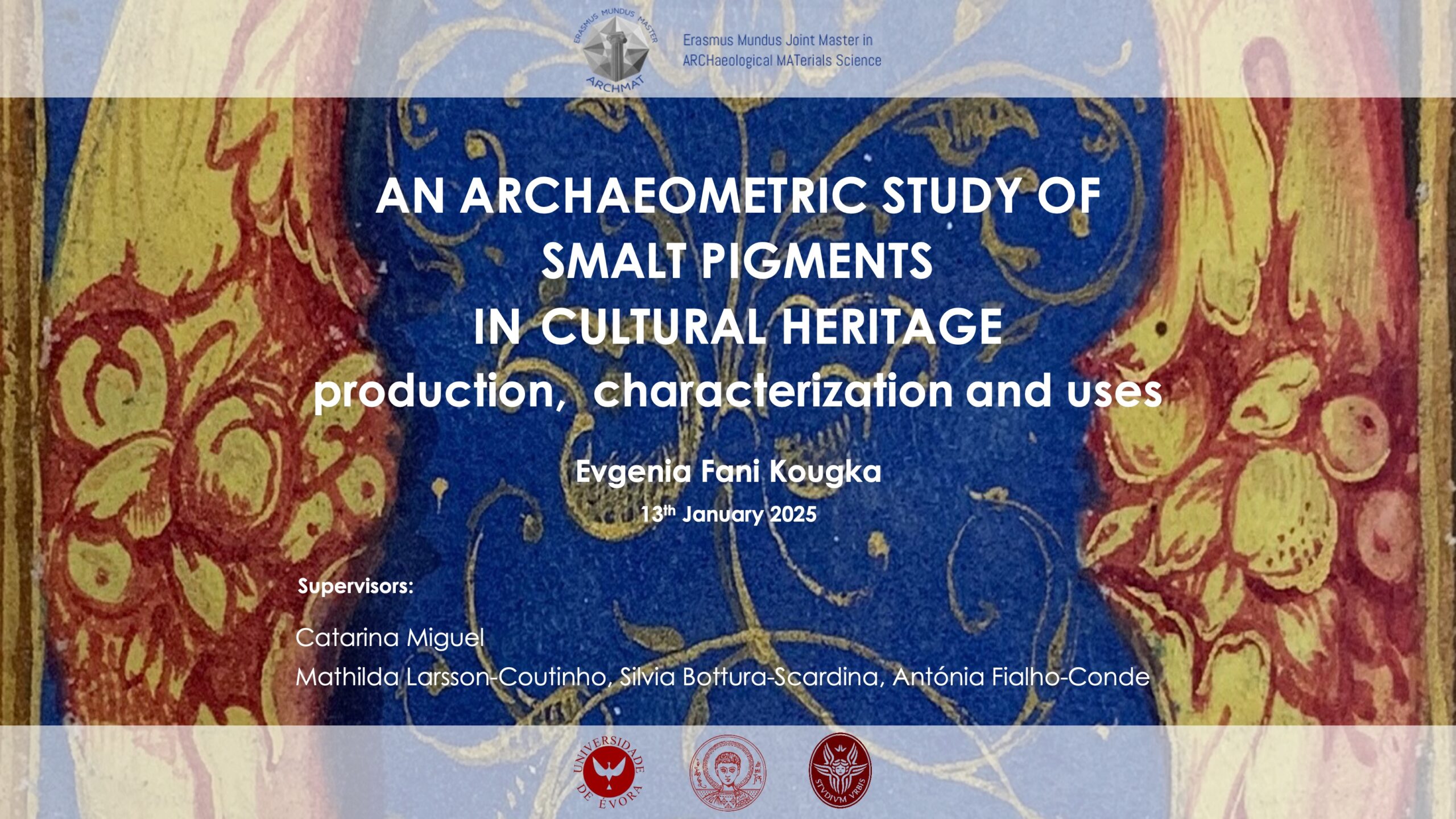
“An archaeometric study of smalt pigments in Cultural Heritage – production, characterisation and uses”. Master in Archaeological Materials Science (ARCHMAT).
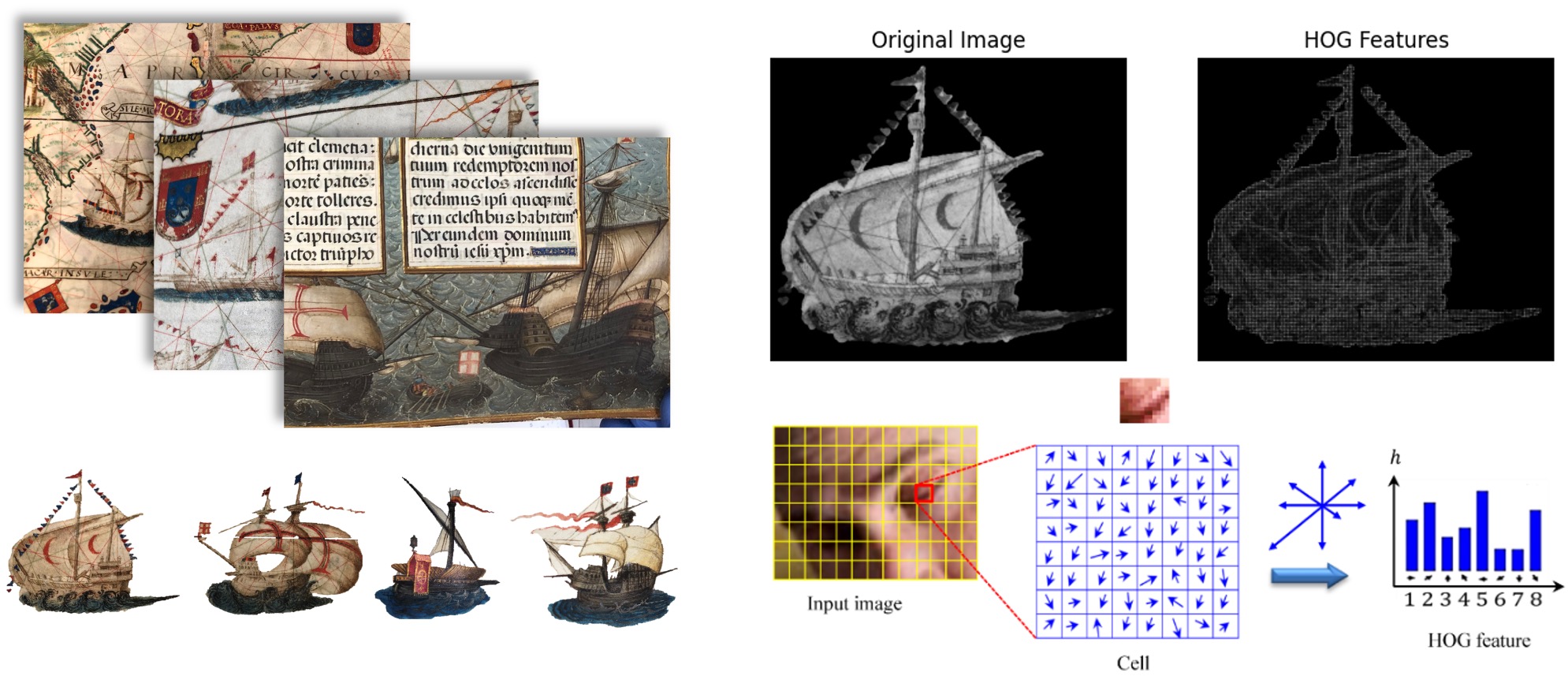
“Deep Learning-Based Microscopy Fluorescence Images Segmentation and Analysis”.
“António de Holanda e a Genealogia iluminada do 3.º Conde da Feira”.
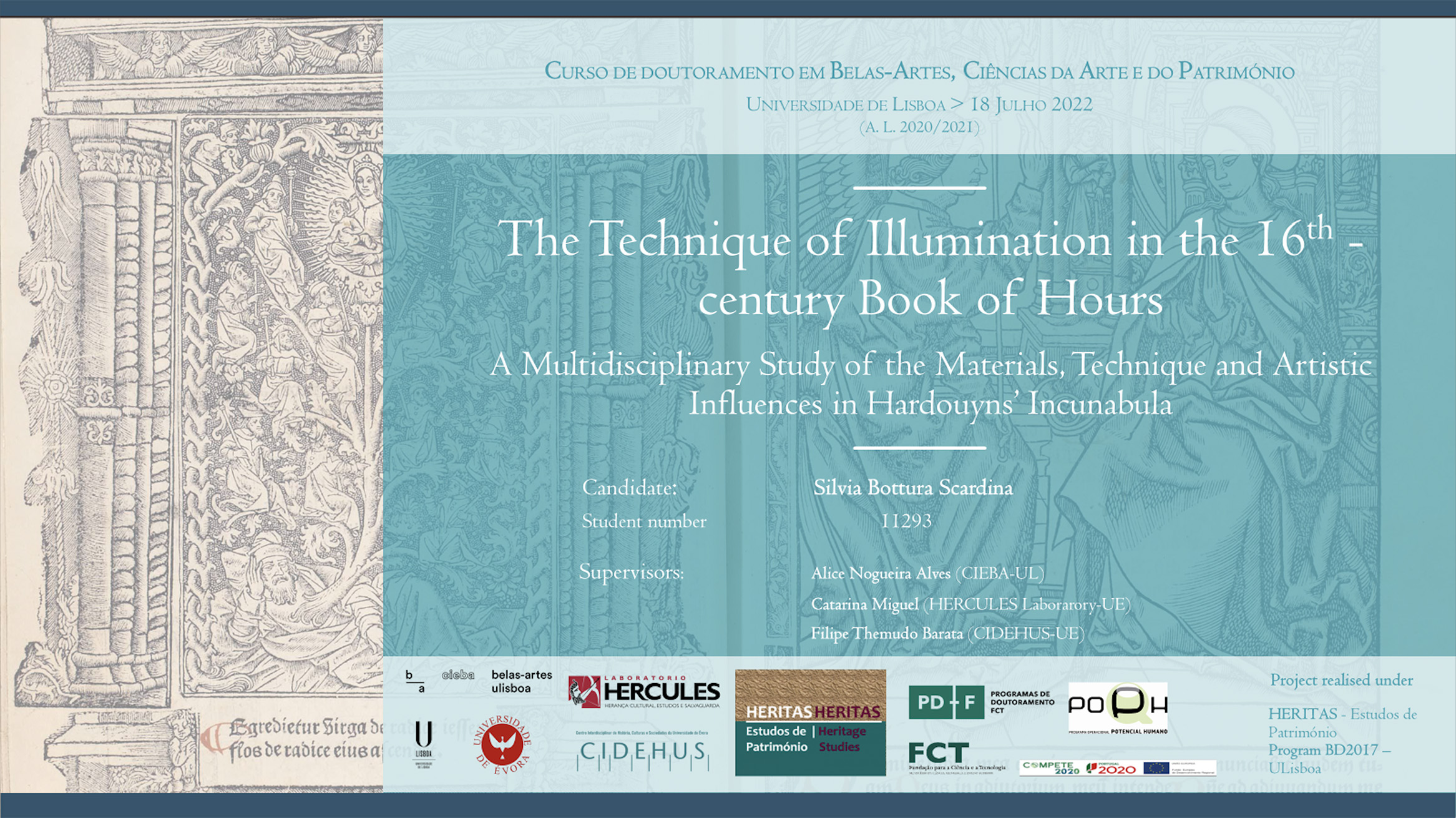
“The technique of illumination in the 16th century Book of Hours – an interdisciplinary study of the materials, technique and artistic influences in Hardouyin Incunabula”.